Thoughts, lessons and stories from the field
Thoughts on startups, finance, and lessons from the field.

Does renting out a home in Forlì yield more than the BTP Valore? The five-year math
A €200,000 home in Forlì, rent at 5%, no vacancy and no management: in five years it earns €14,673, 1.37% a year. The same money in the October 2026 BTP Valore earns €36,594, 3.38% net.

An electrician is not a labourer. He's a company with three trades
What I suggested to a friend who is an electrician to find margin away from the job site: in the price of small jobs, in discounts made honestly, in clients who come back and in a quote written for the client.

Anthropic vs Groupon, Google and Amazon: who grew revenue fastest?
I asked Claude to put Anthropic up against the revenue-growth records of the past. It beats Groupon, Google and Amazon by a wide margin, but in year one two companies did better: two vaccine makers.

From flat-rate contractor to employee: what it really costs the company
The same take-home pay, paid as a salary instead of an invoice from a contractor on Italy's flat-rate regime at 5% tax, costs the company 34.5% to 88% more. The full chain from invoice to total cost, with 2026 parameters.

The Red Napkin: What I Have Been Looking For in Every Company for Twenty Years
A signal that costs next to nothing, sets the whole company in motion on the right customer and stays in their mind. From Jon Taffer to Costco, from Disney to a coffee bar in Naples: the examples, the three-part test and my dining room still to set.

First in paperwork, last in sales: how Italy uses Claude
The Anthropic Economic Index for May 2026, read by an Italian entrepreneur: fifth in the world for the share of regulatory compliance, last among eight comparable countries for sales and strategy, 39th of 121 for overall usage.

Ten exams in ten days, while working: how I prepared the craziest session of my life
June 2025: ten exams in ten days, from microeconomics to labour law, with three small children and the companies. The block plan, the pen, the AI, the stress.

Three years of exams in two, while working: the backward plan
How I planned 180 credits in two years starting from the graduation date: hours per credit, a personal coefficient, a buffer exam and the marketing mistake.

AI won't study for you: how I turned it into a tutor that quizzes me
How I used AI to prepare for exams without shortcuts: the tutor's rules, a six-move loop, an error log, and the four mistakes the AI made.

I enrolled at university at 41: what I learned about learning as an adult
Enrolled at 41, working full time, three years of exams in two. The head start I had, the part you can copy, and why studying as an adult is a different trade.
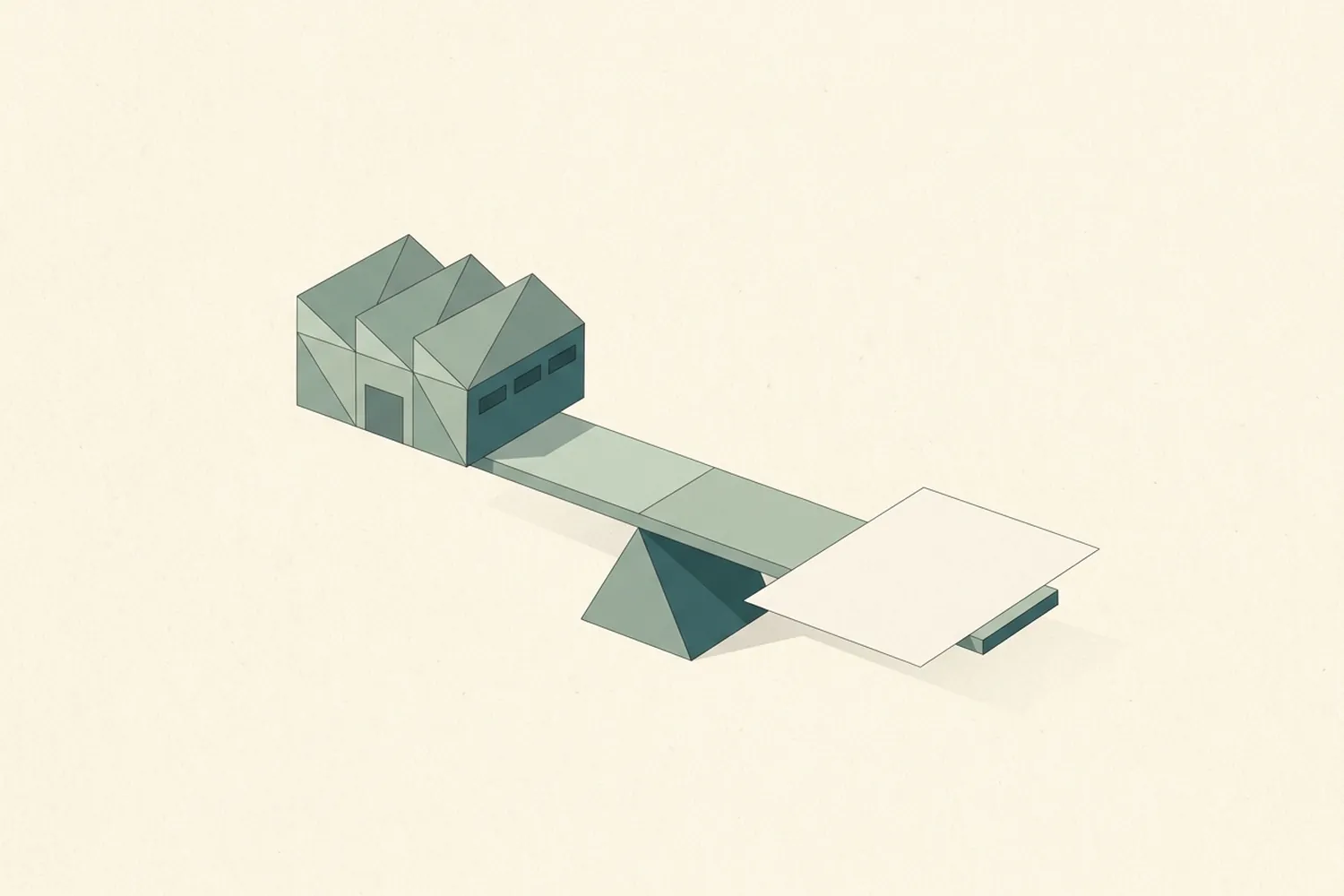
Does a warehouse really beat a government bond? The math nobody does
Of €42,000 in rent, €7,668 is left. Vacancy, property tax, works, closing costs and not being able to sell in a day: every hidden cost has a number. The full comparison against a 10-year Italian bond, everything net, as of 16 September 2026.

Normalized working capital: how it is calculated and why the buyer deducts it from the price
What net working capital is in a deal, how the peg is set, and why the cash a seller frees up in December comes back as a price adjustment. A worked example.

Net financial position (net debt): how to calculate it and why it is worth a quarter of your company's price
What net debt is, how to calculate it under the ESMA schedule, what stays out and why. With the same EBITDA and multiple the perimeter moves 26% of the value. And what monthly net debt tells you if you are not selling.

GPT-6 Astra ships, and in the demo it builds a PowerPoint. What a letdown.
The most capable model ever released, and the showcase use case is a deck consistent with your corporate template. I spent three years in a corporate watching meetings where the deck existed so nobody had to decide: the problem isn't making better PowerPoints.

AI bubble? Nvidia, Anthropic, Dalio, Saylor: let's connect the dots
Nvidia guarantees 105 billion on OpenAI's campus. But the real risk is the 3 trillion off balance sheet that nobody has measured yet. Let's connect the dots.

A degree in under two years, without attending, at 41. AI is part of it, but not the way you think.
Enrolled at 41, degree in under two years as a non-attending student: how I used AI to study, never to cheat. And why university pays off more after 40.

I have become the bottleneck of my own AI
For 25 years the bottlenecks were other people. With AI I do 90% of it myself, and the brake is me: the productivity paradox I wasn't expecting.

AI won't kill the juniors. It will kill the free ride.
Everyone says AI will erase young people from companies. I think the exact opposite: the ones who should be worried aren't those trying to get in, they're those already inside who have been living off their position for years.

AI was supposed to let us build software in-house. Instead the SaaS count went up again.
What I saw at WMF 2026, why 'AI wrappers' are the symptom and not the cure, and why the CEO of Microsoft thinks so too.

AI agents: how to read the marketing without getting played (the Hermes case)
Self-improving, headline benchmarks and GitHub stars going vertical: how to tell real value from marketing in AI agents, starting with the Hermes case.

Your strengths are your blind spot: what longevity teaches anyone building a company
I ran a marathon and realised my mistake in the gym is the same one many entrepreneurs make: we train our strengths and neglect the fundamentals.

Do bonds really protect you in a crash? What I found stress-testing my portfolio
Holding bonds doesn't mean you're protected in a crisis. The difference between government, credit and emerging-market bonds, explained with the numbers.

Why I decided to write (and why you should read)
After 20+ years of building companies, I decided to share what I learned. Not MBA theory, but lessons from the field, mistakes included.